In today's digital age, coding is becoming just as important as reading and math. But how do you get kids excited about programming without making it feel like another homework assignment? The key is to make coding playful, hands-on, and pressure-free.
So read on to learn about beginning coding and a fun coding platform for kids!

Here are some fun ways to introduce kids to coding—without overwhelming them or you.
You don’t need a screen to teach the basics of coding.
My favorite example of unplugged coding is Directional Coding with Candy Corn. Directional coding is easy for young children to understand; use the directions of up, down, left, and right to write out how something will move.
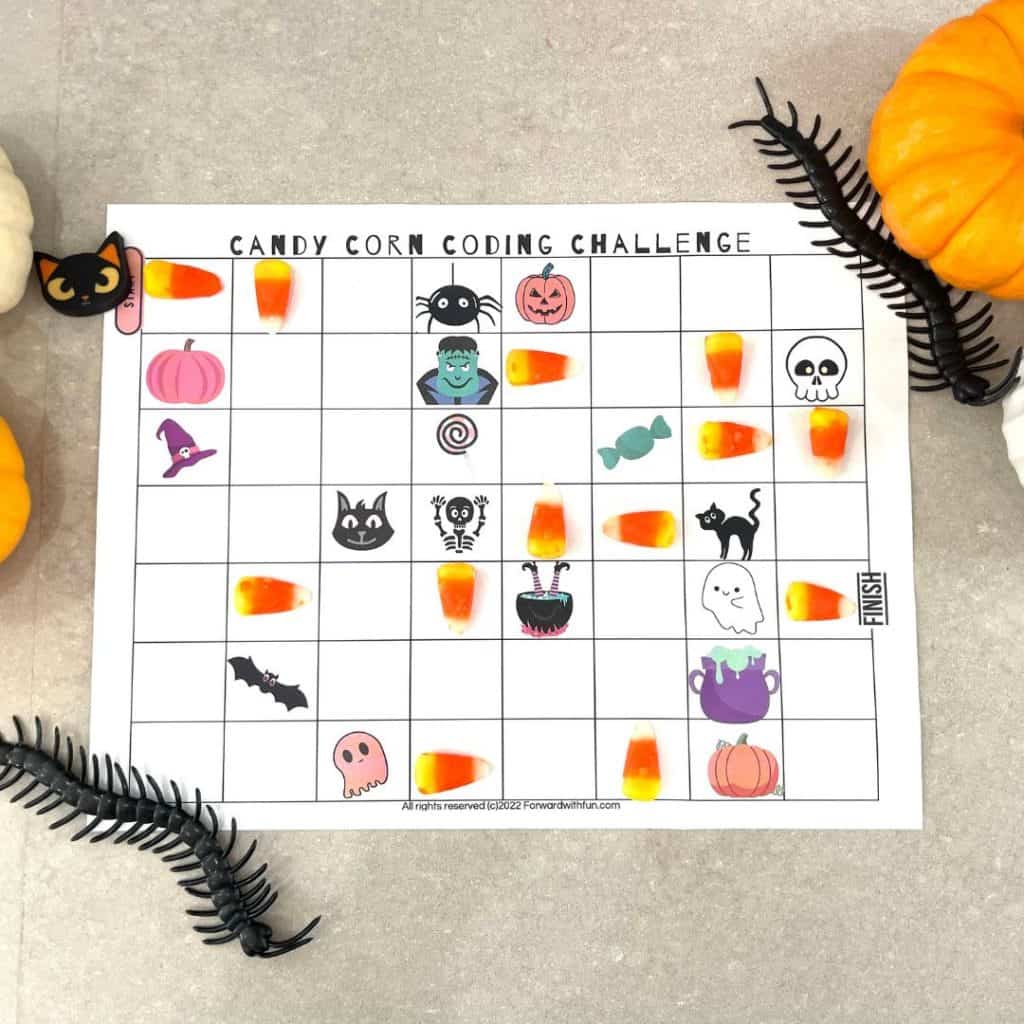
Here are a few simple unplugged coding activities you can try at home or in the classroom:
These fun, screen-free activities help kids internalize coding logic in a hands-on, physical way—perfect for active learners or younger children who aren't ready for digital tools yet.
Children love stories and games, so why not use them as an entry point into coding? Platforms like CodeMonkey turn coding into an adventure, allowing kids to solve puzzles and complete challenges as they progress through different levels. It's a fun coding platform for kids that combines gameplay with real coding concepts. They have very beginning levels for kindergarten aged kids and they can level up to advanced techniques into high school.
My secret: Though I run a blog, I am LOST when it comes to text-based coding. I wouldn't even know how to begin teaching it to my kids, though I really want them to know how to code. Because of CodeMonkey, I don't have to teach it! (But honestly, maybe I should start playing because I do spend a fair amount of money each year on coders to fix issues on my site!)
Check out this video to see how engaging and approachable learning to code can be:
If you’ve never done any coding before, don’t worry—you’re not alone! Coding is really just a way of giving instructions to a computer, and there are many different ways to do it. Here are a few common types you might see in kids’ coding programs:
This is one of the simplest ways to start coding. Kids give a character or object basic movement commands like "move forward," "turn left," or "go backward." It teaches sequencing (doing things in the right order) and logical thinking. Think of it like giving directions to a robot!
Instead of typing code, kids connect blocks of code that represent actions or commands. Each block has a specific function, like playing a sound or repeating an action. This helps children learn the structure of coding without needing to type or memorize anything. This is taught to beginning coders via CodeMonkey!
As kids get more confident, they can start writing real code using languages like Python or CoffeeScript (also taught by CodeMonkey). It’s a bit like learning a new language—kids type out commands to make things happen.
By introducing coding as a creative, playful activity, you can help kids build confidence in this ever-growing and much needed skill. The key is to include their interests and let them direct!
Ready to get started? Let play lead the way! Looking for more STEM activities? Check out our most viral post The Floor is Lava STEM Challenge, downloaded 5,000+ times.

